8 min read
Laying Out OneLake: Workspaces, Lakehouses and Shortcuts
How I decide OneLake layout in Fabric: workspaces as security boundaries, a lakehouse per layer, a flat Tables folder, and shortcuts where copies hurt.
Thoughts on data engineering, cloud architecture, and technology. 2205 articles and counting.
Showing 24 of 2205 posts — page 38 of 92
How I decide OneLake layout in Fabric: workspaces as security boundaries, a lakehouse per layer, a flat Tables folder, and shortcuts where copies hurt.
A diagnose-first workflow for slow Fabric reports: check capacity, the visual, DAX, Direct Lake fallback, Delta file layout and Spark, in that order.
How Fabric smoothing, carryforward and the four throttling stages work, how to read them in the Capacity Metrics app, and which levers actually help.
A practitioner's triage of the Microsoft Fabric December 2023 update: %%configure, Git conflict resolution, KQL in OneLake and what to leave alone.
How LangChain 0.1, AutoGen 0.2, CrewAI 0.1 and Semantic Kernel 1.0 differ in maturity, control and Azure OpenAI fit, and which one I'd pick for what.
A practical look at CrewAI 0.1.x with Azure OpenAI: how agents, tasks and sequential crews work, what's missing today, and when to choose it.
A practical look at AutoGen 0.2 with Azure OpenAI: wiring the config, stopping runaway conversations, sandboxing generated code and registering tools.
When a single GPT-4 agent stops being reliable, split it into specialists. A framework-free supervisor pattern on Azure OpenAI, with trade-offs and limits.
How to add retrieval grading, query rewriting, and groundedness checks to RAG on Azure OpenAI and Azure AI Search without tripling latency or cost.
Chunk documents along their headings, keep tables whole and prefix every chunk with its section path, using Document Intelligence markdown output and Python.
A five-level RAG maturity model for Azure AI Search and Azure OpenAI, covering what each level fixes, what it costs, and when to stop climbing.
How to run internal-only GPTs in ChatGPT Enterprise: sharing controls, what knowledge files really expose, Actions auth, and when to build instead.
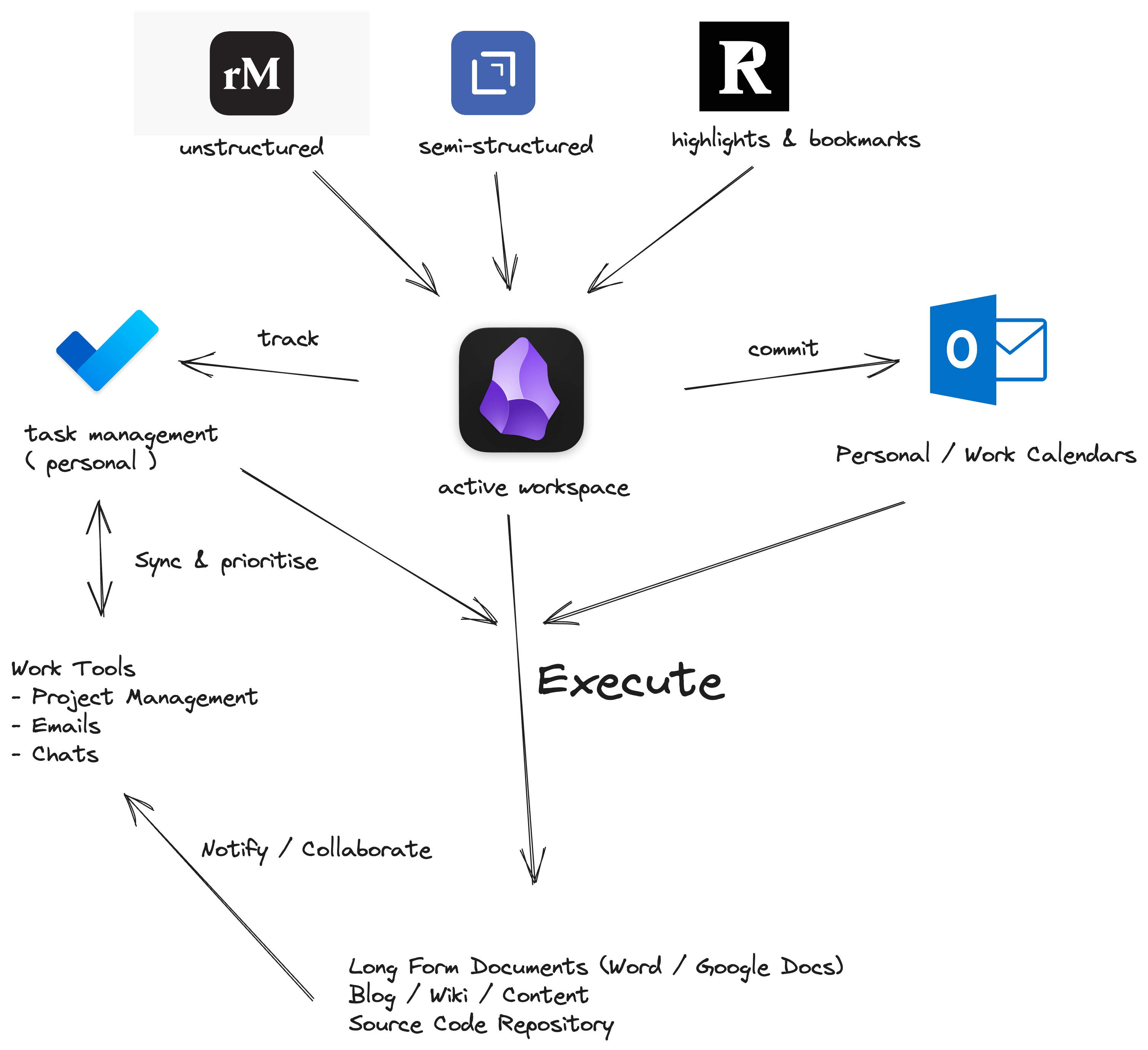
The four-stage personal workflow I use as a knowledge worker, and the tools behind each stage: reMarkable, Drafts, Readwise, Obsidian, To Do and Outlook.
How to structure a production AI assistant on Azure OpenAI Chat Completions: conversation state, retrieval, tool calling and the orchestration loop you own.
How to drive OpenAI Assistants API runs reliably in January 2024: the run state machine, polling, function calls, expiry, concurrency and cost.
GPT-4 Turbo is still a preview model on Azure OpenAI; here's how I'd deploy, budget, retry and test around 1106-preview before real users touch it.
Five enterprise AI bets for 2024, each checked against what is generally available or still in preview on Azure as of 1 January 2024.
2023 closed with more platform and model announcements than any year prior. My central thesis is simple: treat AI as a product — instrument, govern, and…
From enterprise pilots to platform bets, 2023 was the year AI stopped being optional. These are the key takeaways I share with clients when they ask what's…
Platform engineering is the pragmatic answer to scale: provide golden paths, self-service APIs and guardrails so teams move quickly without repeating…
Having lived through the shift from monolithic warehouses to lakehouses, the pattern I'm seeing now is convergence: open formats, governance, and…
There are a few themes I'm watching closely for 2024 — practical agents, small-model efficiency gains, and tighter integration between data platforms and…
Predictions are inherently risky, but after a year working closely with foundation models and platform teams, a few trends feel probable: larger context…
Cost optimisation isn't about cutting features — it's about aligning spend with business value. During holiday slowdowns I help teams identify idle…