5 min read
March 2026: A Fixed Bedtime, Two Inbox Checks, One Tool to Ship
March plan: turn February's two drifting goals, sleep and email, into fixed rules, keep what held, and ship the side project I've already built.
34 articles
March plan: turn February's two drifting goals, sleep and email, into fixed rules, keep what held, and ship the side project I've already built.
Grading my four February commitments: 29 posts in 28 days, two no-tech Sundays, one new engagement against two noes, and sleep stuck at 6.5 hours.
Fifty-five days of daily posts: calibrating my opinions by being wrong in public, letting go of saved-up ideas, and why the empty-tank days are worth it.
Seven years ago a tech lead answered my pull request with one question about who it was for, and it still shapes how I review code.
Our second family day without screens: fewer phone reaches, kids who didn't argue, a sharp observation from my wife, and the work anxiety that still shows up.
My nine-year-old fixed a stuck LEGO build by going back to the last step that worked. It's the debugging discipline I'd let slip on a Fabric pipeline.
A production alert on date night taught me my wife doesn't need grand gestures. She needs my attention, and my phone was taking it.
Why I stopped saying yes to every consulting project, the three filters I now run each offer through, and how to decline without burning the relationship.
Forty-one days of daily blogging taught me I write to find ideas, not share them, and that cutting half the draft is where the thinking happens.
When Andriel asked what I do at work, I wrote down what I want my kids to learn first: critical thinking, privacy, boundaries and making things.
The first family day with phones, laptops and tablets put away: the itch in the first hour, the fake-urgent work thoughts, and why we're doing it again.
February plan after 31 days of daily writing: keep the habit, take Sundays off tech, narrow to two focus areas, and stop running on five to six hours of sleep.
The final tally on January: 31 posts in 31 days, one working Saturday, three habit experiments that failed, and the short list I'm taking into February.
A mid-course report card on four January commitments: weekend boundaries, being present, daily writing and AI focus, plus three small goals for February.
Andriel showed me a Pokémon drawing and I answered without looking up. The one rule I set afterwards: when my kids talk, the phone goes down.
What our family has learned about our son's autism meltdowns: what makes them worse, what helps, how we prevent some, and why it isn't bad parenting.
Trying to learn every new framework and model leads to fatigue, not growth. Why depth, deliberate rest and relevance beat keeping up.
How I went from working every weekend to zero weekend work: the setup, the team pushback, what changed after eight weeks, and the exceptions I still allow.
Why I still keep a blog when everyone posts on LinkedIn and X: ownership, clearer thinking, and a searchable record of my work.
Andriel needs routine, not just likes it. Living with that has changed how I design functions, error messages, API deprecations and change for my teams.
My seven-year-old asked why I'm always on my computer. How remote tech work erased my boundaries, and the rules I'm putting back in place.
How I explained ChatGPT to my sons, aged seven and 10: autocomplete, educated guessing, and why sounding confident is not the same as being right.
Why I stopped making New Year's resolutions, what I'm building on in 2026, and the four questions I'll use to judge the year as a father and practitioner.
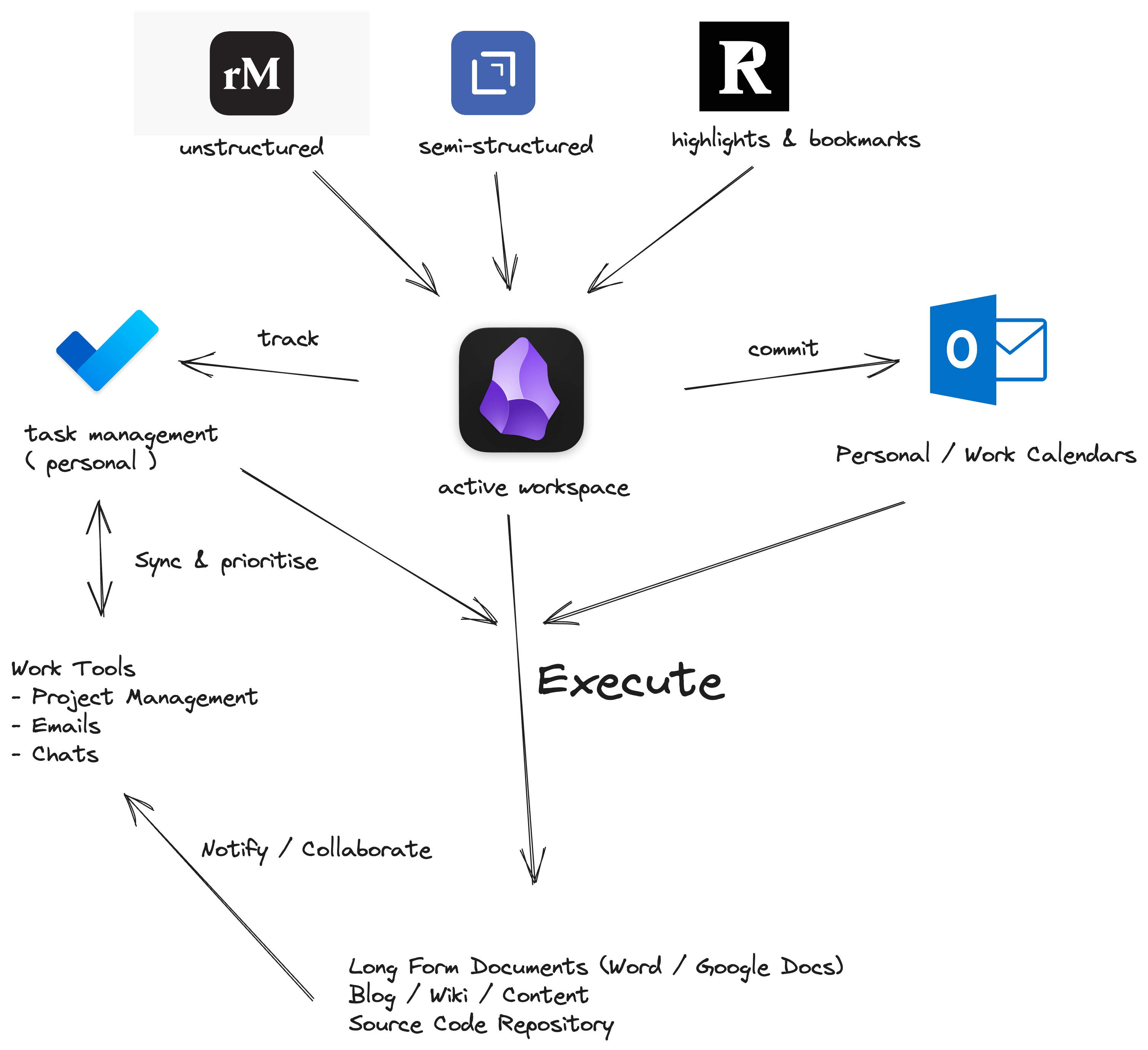
The four-stage personal workflow I use as a knowledge worker, and the tools behind each stage: reMarkable, Drafts, Readwise, Obsidian, To Do and Outlook.
Here is a list of all the relevant technology set up that I use personally at work, home, and everything in between. I grouped them on different groups…
I recently gave a graduation speech to my high school alma matter. Compared to my usual technical talks, this time it's about inspiring the younger…
Five reasons running your own business is worth trying at least once, from the MBA you earn by doing to finding out what clients will actually pay you.
Five habits I use when I know what I should be working on but can't start: cut distractions, shrink the task, commit to a peer, schedule it and be kind.
I barely finished a chapter before 2018. Since then I've read close to 100 books. Here's what changed, how I read, and how I choose what to read next.
The 10x engineer myth, vanity metrics and social media make good developers feel small; aim to beat your past self, not the top 1%.
Autoplay on YouTube, Netflix and Facebook decides what you watch next. Five tricks I use to stop letting the next button make that choice for me.
Instead of chasing another tech trend in 2021, I'm working on one habit: using every device and app with a clear purpose, then putting it down when I'm done.
Why I stopped blogging, why I'm starting again, and why I want a corner of the internet I own: no ads, no walled garden, just my own words and time.